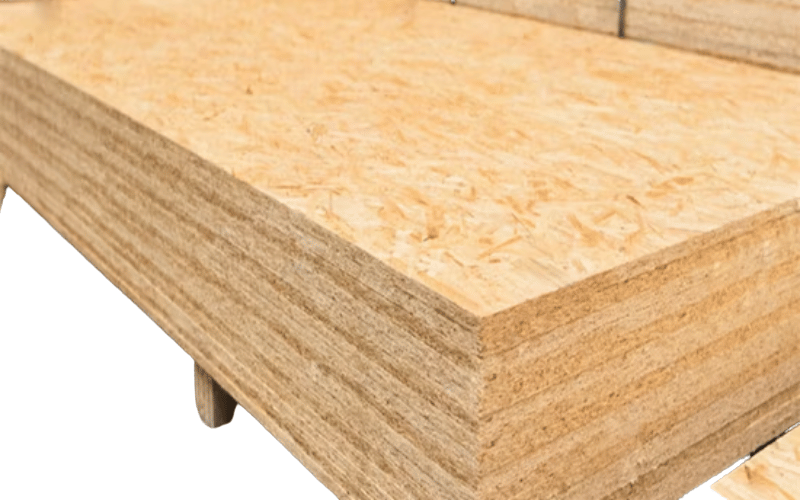
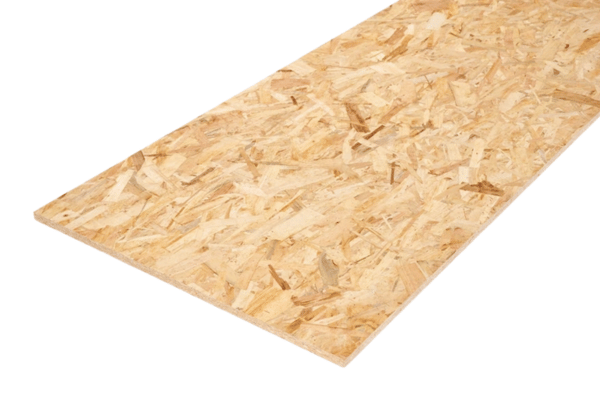
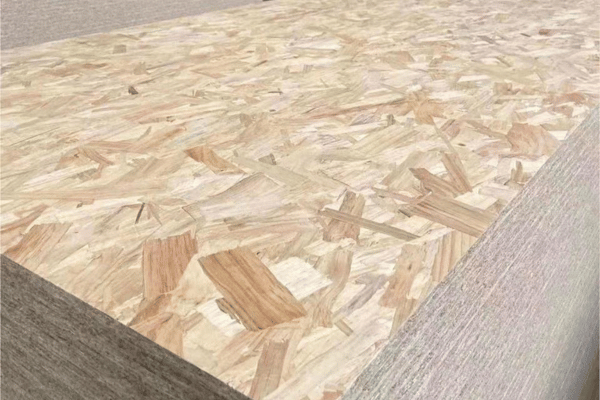
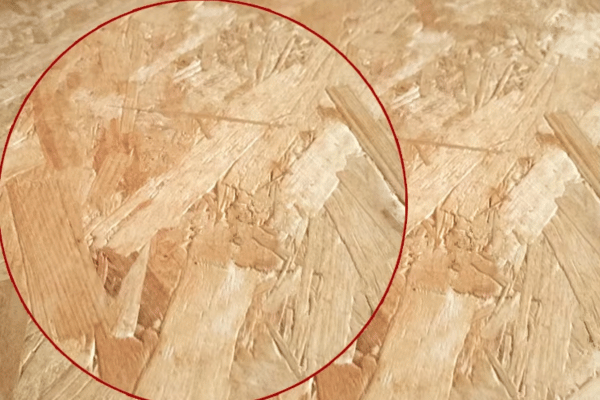
OSB Standard Sizes
| Length (mm) | Width (mm) | Thickness (mm) | Core Material | Grade |
|---|---|---|---|---|
| 2440 / 2500 | 1220 / 1250 | 6 – 25 | Poplar, pine, hardwood, etc. | OSB-1 OSB-2 OSB-3 OSB-4 |
OSB Specifications
| Property | Value |
|---|---|
| Tolerance | Length & Width: +/- 2mm, Thickness: +/- 0.2mm |
| Grade | OSB-1, OSB-2, OSB-3, OSB-4 |
| Moisture Content | 3% – 12% |
| Adhesive | MR, Melamine WBP, Phenolic WBP, etc. |
| Density | 620 – 730 kg/m³ |
| Certified | FSC, CE, CARB |
OSB Advantage
1) Sorting, after harvesting, the logs are transported to the factory wood yard where they are sorted according to species.
2) Preparation,the logs are immersed in conditioning ponds for cleaning and thawing, to prepare for processing.
3) Debarker, the logs then pass through a debarker, where the bark is stripped off. The bark will be used as fuel for the plant’s energy
production.
4) Stranding, the logs are then sliced into thin strands (wafers) of a specific size.
5)Wet Bins, the strands are stored in wet bins until ready to be dried.
6) Drying,the strands pass through a rotary dryer until the desired humidity is reached. Fine particles are sieved off, for use as an
energy source.
7) Blender,the strands are then mixed with resin and a small amount of wax, which improves the efficiency of the resin and increases
resistance to moisture and water absorption.
8) Formation Line, The strands pass through orienters which form a mat composed of individual layers superimposed perpendicularly
to each another.
9) Pressing,The mats are pressed at high pressure and high temperature which causes the resins to react, thus forming a high density
structural panel.
10) Finish line, The panels are cut into standard sizes (4`x 8′), and stamped according to grade. Once stacked in bundles, a sealant is
applied to the sides to increase water resistance.
Usages:
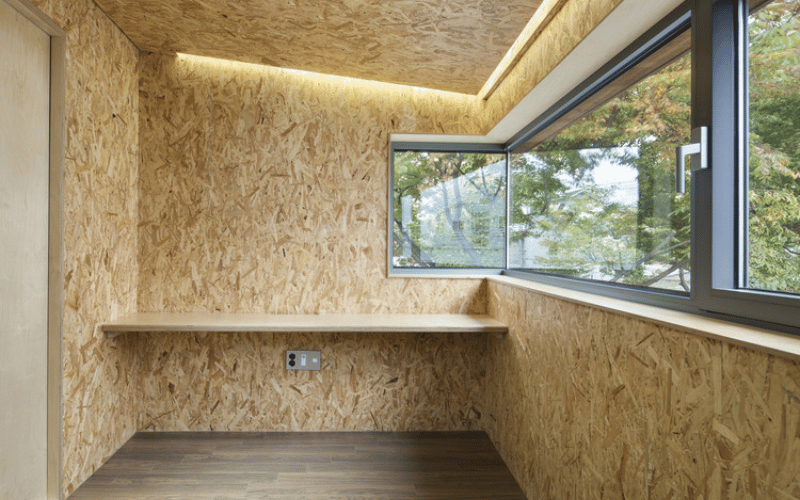
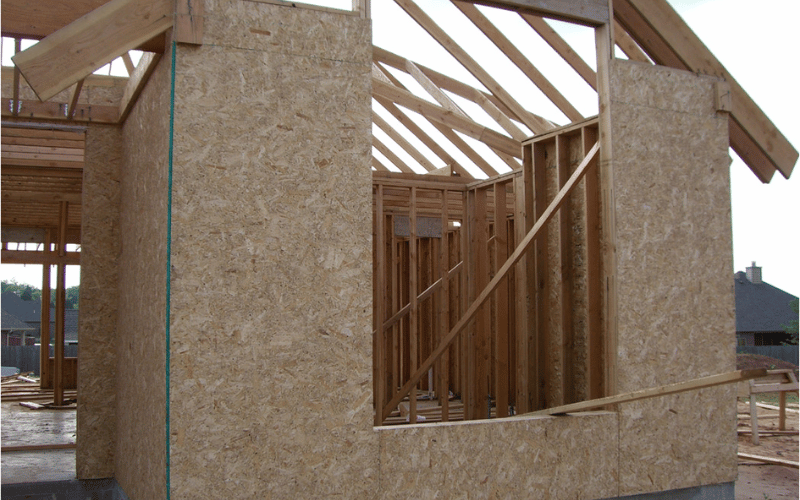
Roof decking, furniture, packing, hoarding, signboards, and portable building, constructional insulation board
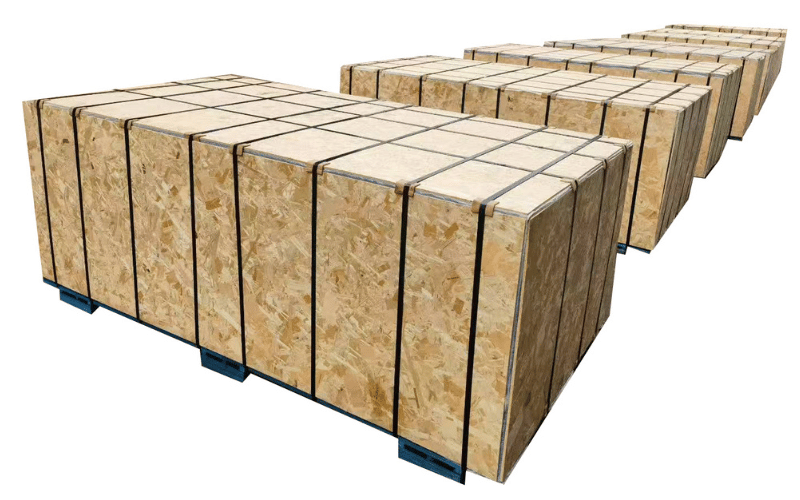
Package: